
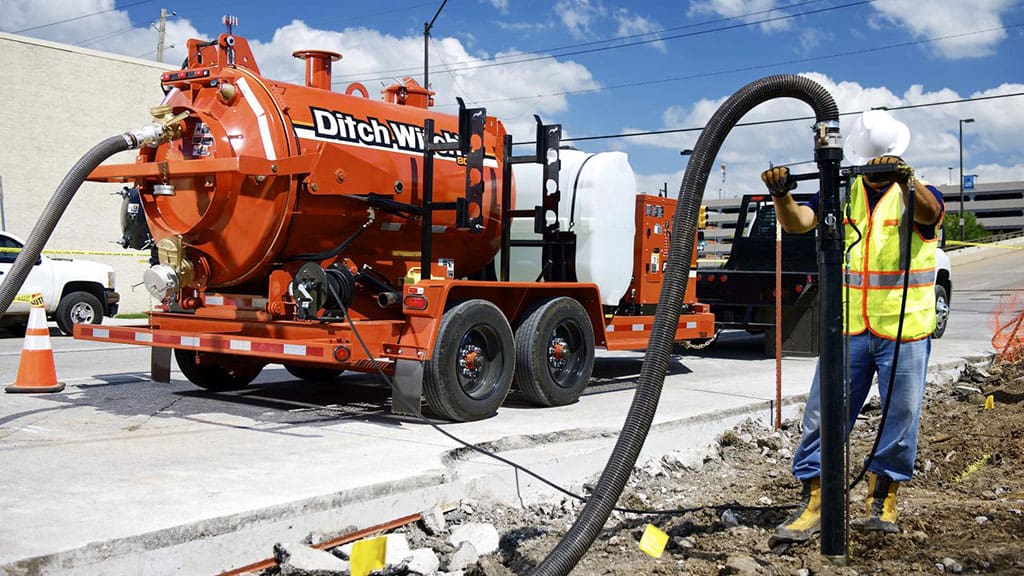
Potholing is digging a small, controlled hole to expose an underground service, such as a power cable, gas main, water main or fibre line, so you can see exactly where it is before anyone digs or drills nearby. On most sites today it is done by vacuum excavation, also called non destructive digging or NDD, because nothing mechanical touches the service while the hole is opened.
At BG Drilling, potholing is part of almost every hole we drill on a live site, and we also provide it as a stand-alone vacuum excavation service for civil contractors, utilities and consultants across Sydney and NSW. Here is how it works, the methods we use and when your project needs it.
What is potholing?
A pothole in this sense is a small inspection hole dug down to a buried service. Once the service is exposed, its depth, alignment, size and condition can be measured and recorded, rather than estimated from a plan that may be decades old.
Potholing does not replace service plans or electronic location. It follows them. The plans and the locator show roughly where a service should be, and the pothole proves it. That confirmed record is what lets a designer, a drill crew or an excavator operator work with confidence. You may also hear it called service proving or utility potholing.
How does potholing work?
Compressed air or high pressure water breaks up the ground, and a powerful vacuum lifts the loosened soil through a hose into a sealed debris tank on a truck or trailer. Because nothing mechanical strikes the ground, the service is uncovered without being cut, crushed or nicked.
A typical potholing job runs like this:
- The services are marked out from the service plans and electronic location.
- The crew puts on protective equipment and prepares the site for digging.
- Air or water loosens the ground over the marked service, and the vacuum lifts it into the tank.
- Digging continues until the service is exposed.
- The depth, alignment, size and condition of the service are measured and recorded.
- The hole is backfilled and the surface reinstated.
Where a slab or pavement is in the way, our crews concrete core through it first, from 60 to 500 mm, and then vacuum down to the service.
Air or water: which method is used?
Both work. The right choice depends on the ground and on how the hole will be reinstated.
Air vacuum excavation
Compressed air loosens the ground and the spoil is lifted into the tank dry. Because it stays dry, it can go straight back into the hole as backfill once the work is done. That suits potholing where the ground has to be reinstated the same day, and it is the method we use most.
Hydro excavation
High pressure water cuts faster in hard, compacted or clay ground and is the better choice for deeper holes and tougher conditions. The trade-off is wet spoil, which has to be carted away rather than returned to the hole.
Our crews pick the method for the ground and the reinstatement, not for whichever truck happens to be free.
When do you need potholing?
Any time ground will be broken near services that have not been proven. The most common cases are:
- Before drilling on a live site. Every geotechnical, environmental or water bore hole we drill in car parks, road reserves, rail corridors and against existing buildings starts with a hole vacuumed down past the service depth before the rig is set up over it.
- When a new service crosses existing ones. A vacuum excavated slot trench exposes the existing assets and keeps them intact while the new one goes in.
- At the design stage. Potholing early finds clashes between the proposed work and existing services before heavy digging starts, while the design can still change.
- On older sites. Wherever the service plans are incomplete, and on older sites in Sydney they usually are.
- When the safe work method calls for it. Vacuum excavation is written into the safe work method for drilling and excavation on most commercial, infrastructure and utility projects.
Why not dig by hand or with an excavator?
Hand digging and mechanical excavation both carry a strike risk wherever the plans are incomplete. A strike on a power cable, gas main, water main or fibre trunk stops the site, puts people at risk and brings repair costs and penalties that dwarf the cost of proving the service first. Vacuum excavation removes the guesswork about what sits in the first few metres of ground.
The same units also reach spoil where an excavator bucket cannot, such as under pipework, inside plant rooms or at the bottom of a deep pit. On contaminated sites the spoil goes straight into a sealed tank instead of a pile on the ground.
Trucks and trailers for different sites
BG Drilling runs vacuum excavation units in 1,000, 3,000 and 5,000 litre capacities, operated by dedicated non destructive digging crews.
- 1,000 litre trailers fit where a truck cannot: rear yards, basements, tight laneways and inside buildings, where they work alongside our tight access drill rigs.
- 3,000 and 5,000 litre trucks carry the spoil volume for trenching, a run of potholes in a day and deeper excavation, without repeated trips to tip.
Vacuum loaders and non destructive excavation trucks and trailers are also available for wet and dry hire through our plant hire fleet.
Potholing FAQs
Is potholing the same as non destructive digging?
Not quite. Non destructive digging is the method: air or water to loosen the ground and a vacuum to remove it. Potholing is one of the jobs it is used for, alongside slot trenching, clearing boreholes and cleaning out pits, catch basins and valve boxes.
Can the hole be backfilled the same day?
With air excavation, usually yes, because the dry spoil can go straight back in. Hydro excavation leaves wet spoil that is carted away rather than returned to the hole.
Does potholing replace service location?
No. Potholing follows the service plans and electronic location and confirms what they show. It is the step that turns a marked line on the ground into a measured, recorded service.
Book potholing in Sydney and NSW
Tell us what needs to be exposed, the ground, the access, and whether it sits ahead of a drilling program, and we will tell you which unit and method suit. Get in touch with BG Drilling or see our vacuum excavation and non destructive digging services.